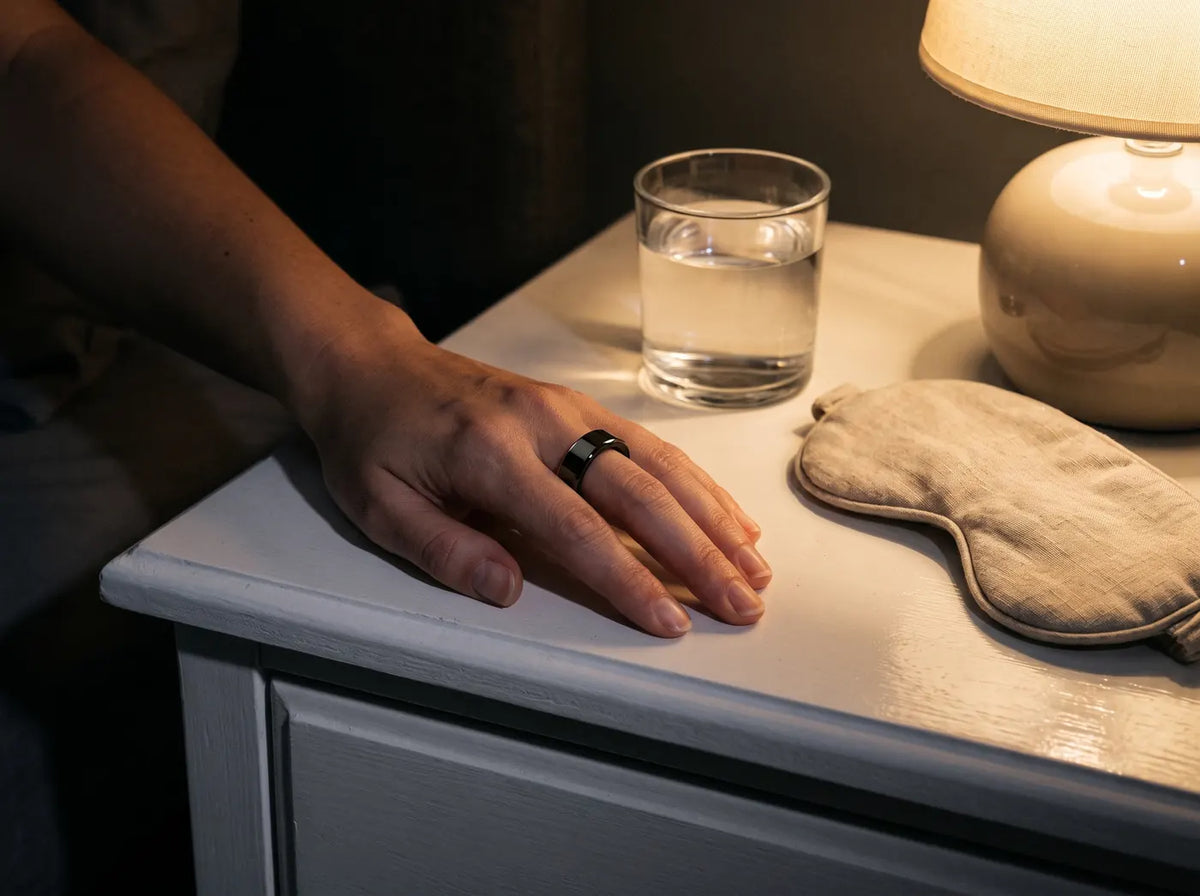
Can a Smart Ring Really Improve Your Sleep? Here's What It Actually Tracks

No ring can force you into bed on time. What a smart ring can do is show you, with real data, exactly what's happening while you sleep — which is usually the missing piece for anyone who feels tired despite "getting enough hours."
What smart ring sleep tracking measures
Worn overnight, a ring like Odessa uses its heart rate sensor, motion sensor and skin temperature sensor together to estimate several things a smartphone alone can't: total sleep time, sleep stages (light, deep and REM sleep), how long it took you to fall asleep, how many times you woke or stirred during the night, your overnight resting heart rate, and overnight blood oxygen (SpO2) trends.
Why sleep stages matter more than total hours
Eight hours of mostly light, restless sleep can leave you feeling worse than six hours of solid deep and REM sleep. Deep sleep is where physical recovery happens; REM is heavily tied to mental recovery and memory consolidation. A smart ring breaking your night into stages is what turns "I slept 7 hours" into "I slept 7 hours but only got 40 minutes of deep sleep," which is a much more useful thing to know if you're waking up tired.
Spotting patterns you can't feel in the moment
The real value shows up over a week or two of data, not one night. Common patterns people find once they start tracking: a late meal or workout consistently reducing deep sleep, alcohol reliably cutting REM sleep short even when it helps you fall asleep faster, a consistent overnight heart-rate rise on nights before something stressful, or a bedtime that's 45 minutes later than they thought.
 Screen-free · No subscriptionOdessa Smart RingShop the ring →
Interactive · Sleep-stage explainer
What happens in a night of sleep? Tap a stage
An illustrative night: sleep moves through stages in cycles of roughly 90 minutes.
Brief awakenings are normal, and most people don't remember them. Lots of them can leave you groggy. Overnight movement and heart rate changes help a ring estimate when you were restless or awake.
Light sleep usually makes up the biggest share of the night. You drift in and out of it between other stages.
Deep sleep tends to come earlier in the night. It's the hardest stage to wake from.
REM sleep tends to get longer towards morning. It's the stage most linked with dreaming.
Illustrative chart, not real user data. Odessa tracks your sleep plus overnight heart rate, SpO2 (general wellness) and skin temperature so you can see your patterns over time. It is not a medical device and does not diagnose sleep conditions.
What it can't do
Worth being upfront about: a smart ring is a wellness device, not a medical one. It estimates sleep stages and vitals using sensor algorithms, and it doesn't diagnose sleep disorders like sleep apnea. If you consistently see very low overnight SpO2 or suspect a real sleep disorder, that's a conversation for a doctor, with the ring's data as a useful starting point rather than a diagnosis.
Getting useful data from night one
A few things help accuracy from the start: wear the ring snug enough that it doesn't spin on your finger overnight, keep it charged so it doesn't die mid-sleep (Odessa's 8-day battery makes this easy), and give it a full week before drawing conclusions — one bad night tells you less than a pattern across several.
The bottom line
A smart ring doesn't improve your sleep directly. It removes the guesswork, so the changes you do make — an earlier bedtime, skipping the late coffee, a cooler room — are based on what your own data actually shows, not a hunch.