How to Find Your Smart Ring Size at Home (No Sizing Kit Required)

A smart ring has to sit snugly enough to read your pulse accurately, but not so tight it's uncomfortable to wear 24 hours a day. That's a narrower margin than a regular ring, which is why sizing trips up more first-time buyers than almost anything else. The good news: you can get an accurate measurement at home in about five minutes.
Interactive · Step-by-step sizing
Measure your size at home in 4 steps
1. Grab a paper strip or string
Cut a strip about 1 cm wide. Measure at the end of the day, when fingers are a little larger, and not when your hands are cold.
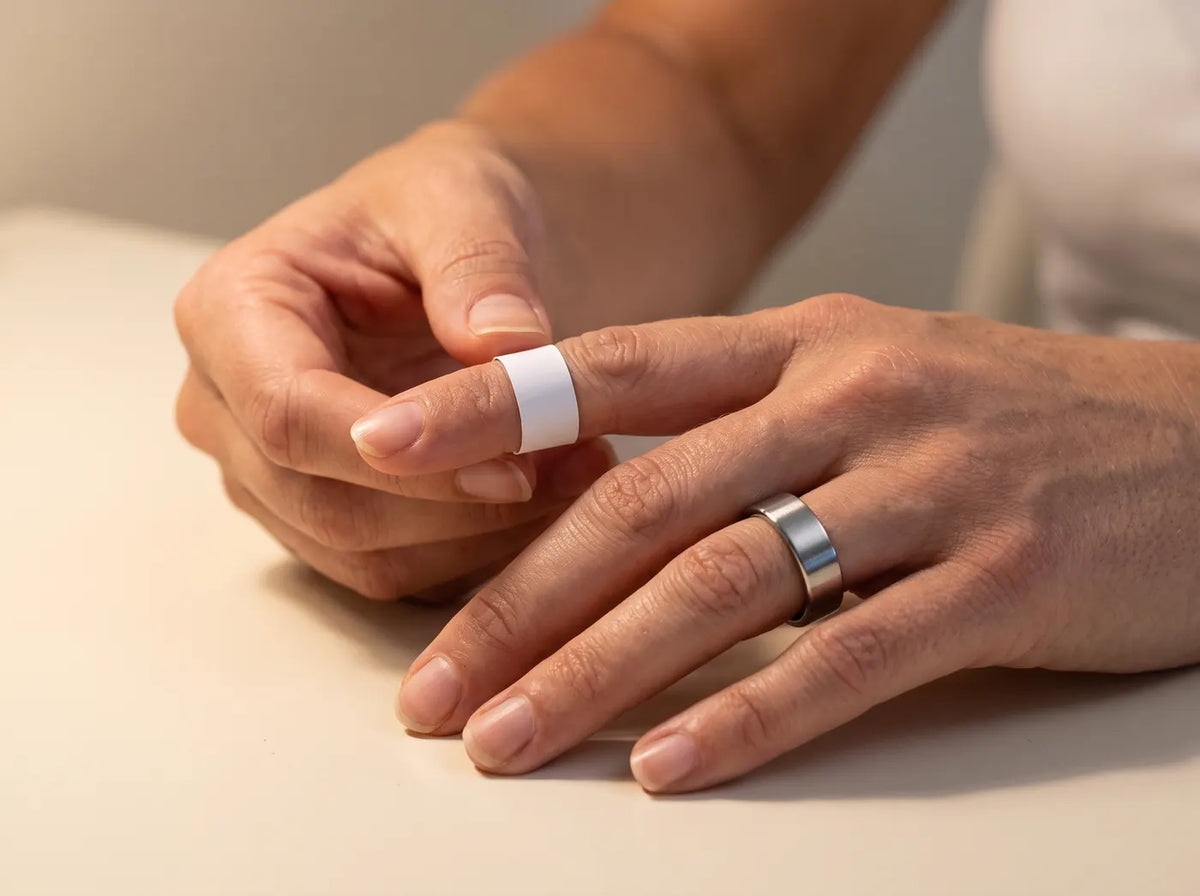
2. Wrap the base of your finger
Wrap it snugly where the ring will sit, on the finger you plan to wear it on. Snug, not tight: it should still slide over the knuckle.
3. Mark and measure
Mark where the end overlaps, lay it flat and measure the length in millimetres with a ruler.
4. Convert it below
Type the number in millimetres. We'll give your regular US size and the Odessa size to order (one size up, because smart rings are wider than normal bands).
Odessa comes in US sizes 6–14. Conversion uses the standard US ring scale and is a guide, not a guarantee. Between sizes? Size up. Free size exchanges: we ship the new size first. Printable ring sizer
Why smart ring sizing is different from regular jewelry
A normal ring just needs to not fall off. A smart ring needs skin contact to read heart rate, blood oxygen and temperature, so it fits noticeably snugger than the rings you might already own — think "snug but comfortable," not "loose enough to spin freely." Because of that, going by your normal ring size alone can be misleading. Most smart ring brands, Odessa included, run about half a size to a full size larger than a standard fashion ring to allow for the extra electronics inside the band.
Method 1: the string or paper strip test
- Cut a thin strip of paper or a piece of string about 4 inches (10cm) long.
- Wrap it snugly around the base of the finger you'll wear the ring on — snug enough that it doesn't slide over your knuckle, but not tight.
- Mark where the strip overlaps itself, then measure that length in millimetres with a ruler.
- Divide that number by 3.14 (pi) to get your finger's diameter in millimetres.
- Match that diameter against a standard ring size chart to find your size.
 Screen-free · No subscriptionOdessa Smart RingShop the ring →
Method 2: an existing ring you already own
If you have a ring that already fits the target finger well, measure its inside diameter with a ruler (or against a printed ring sizer chart) and match that to the size chart directly. This tends to be the most accurate method if the ring fits the way you want your smart ring to fit.
A few things that throw off the measurement
- Time of day: fingers swell slightly by evening and in warm weather. Measure a couple of times across the day and go with the middle reading.
- Dominant hand: your dominant hand's fingers are often very slightly larger. Measure the actual finger you plan to wear the ring on.
- Knuckle size vs. base size: the ring needs to pass over your knuckle to put on, so if your knuckle is noticeably wider than the base of your finger, size for comfortable knuckle clearance rather than the tightest possible base fit.
Still unsure between two sizes?
Size up. A smart ring that's very slightly loose still reads accurately and is comfortable to sleep in; one that's too tight can be uncomfortable within hours and may affect blood-flow-based readings. Odessa ships with a 30-day return window specifically so a size swap is never a hassle if you land between sizes.