Wearing a Smart Ring Every Day: What Actually Changes After 30 Days

A lot of smart ring marketing jumps straight to the transformation story. In reality, the first month of wearing one is quieter than that — but a few real changes do tend to show up, in a fairly predictable order.
Week 1: forgetting it's there
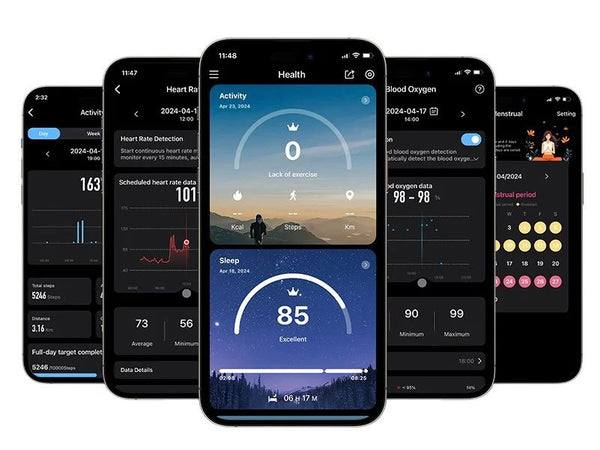
The first few days are mostly about the ring itself, not the data. A well-fitted band, Odessa included, tends to disappear within 48–72 hours — you stop noticing it on your hand the same way you'd stop noticing a wedding band. The main adjustment is remembering to charge it on a routine (most people find a few minutes each morning while showering or making coffee is enough with an 8-day battery) and getting used to checking the app instead of just going by how you feel.
Week 2: the first real patterns appear
One night of data is noise; a week of data is a pattern. This is usually when people notice their first genuinely useful insight — a consistent dip in deep sleep on nights they worked out late, a resting heart rate that's higher than they assumed, or a stress score that spikes at a predictable time each weekday. Nothing you couldn't have guessed, maybe, but now it's confirmed instead of assumed.
Week 3: small, deliberate changes
This is typically where behaviour starts to shift, and usually only in small ways: moving a workout earlier in the day after noticing it delays sleep onset, cutting the last coffee off an hour earlier, or simply going to bed when the data suggests rather than when a show ends. None of this requires the ring to "tell you" anything — it just replaces a guess with a number, which makes the decision easier to actually follow through on.
 Screen-free · No subscriptionOdessa Smart RingShop the ring →
Interactive · 30-day timeline
Your first 30 days, week by week
What wearing it every day usually looks like. Everyone is different, so treat this as a guide, not a promise.
- Day 1
Set up and pick your finger
Pair it with the free app, choose the finger that feels best (index or middle are popular), and wear it to bed.
- Week 1
Getting a baseline
The first nights mostly establish your normal: typical sleep, resting heart rate, temperature and HRV. Don't read much into single days.
- Week 2
First patterns appear
You may notice what lines up with a rough night: late meals, screens, a hard workout or a stressful day.
- Week 3
Try one small change
Pick one habit (an earlier wind-down, say) and see how your own numbers respond over a few nights.
- Week 4
Decide if it's useful
By now you know whether the data helps you.
Odessa comes with a free 30-day trial, no questions asked, and a 12-month warranty.
Week 4: it becomes a baseline, not a novelty
By the end of the first month, the ring stops being something you're actively "trying out" and becomes a normal source of information, the same way a bathroom scale or a step count already might be. The useful shift here is comparative: instead of asking "did I sleep okay?" in the abstract, you're asking "is this better or worse than my usual?" — which is a much more actionable question.
What doesn't change
Worth being honest about: the ring doesn't do anything on its own. It won't lower your stress, improve your sleep, or get you more active by itself — it just gives you a clearer, more consistent signal than "how do I feel today," which is often wrong in either direction. The people who get the most out of the first month are the ones who actually look at the trends, not just the daily number.
Is a month enough to know if it's for you?
For most people, yes — a full sleep cycle of data plus a couple of weekly rhythms (workdays vs. weekends, workout days vs. rest days) is usually enough to see whether the patterns are useful to you personally. If it isn't, Odessa's 30-day return window means that's exactly the window you need to decide, risk-free.