
Why Am I So Tired After 8 Hours of Sleep? 7 Patterns Worth Tracking

You went to bed on time, you were in bed for eight hours, and you still woke up feeling like you'd barely slept. It's one of the most common and most frustrating feelings there is. The good news is that "time in bed" and "rest you actually got" aren't the same thing, and there are everyday patterns you can look at.
Important: this is general information, not medical advice. If you're tired most days for weeks, or tiredness is affecting your life, please speak to a doctor. Ongoing fatigue can have medical causes that need checking.
1. Time in bed isn't time asleep
If it takes you 40 minutes to drift off and you wake up a few times in the night, eight hours in bed can easily be six and a half hours asleep. Tracking when you actually fell asleep is often eye-opening.
2. Restless nights you don't remember
Many people wake briefly through the night without remembering it. A tracker can show how restless the night was, which helps explain why you feel unrested even when the hours look fine.
3. An inconsistent bedtime
Going to bed at 10pm on weeknights and 1am at weekends can leave you feeling jet-lagged on a Monday. Try keeping bed and wake times within about an hour of each other, even on weekends.
4. Late caffeine
Caffeine can stay in your system for hours. An afternoon coffee might not stop you falling asleep, but it can make sleep lighter. Try cutting off caffeine by early afternoon for a week and compare.
5. Alcohol before bed
A glass of wine can make you drowsy, but alcohol often leads to more broken sleep in the second half of the night. Notice whether your restless nights line up with evenings you had a drink.
 Screen-free · No subscriptionOdessa Smart RingShop the ring →
Interactive · Sleep-debt calculator
Add up last week's sleep against your own goal
Type roughly how many hours you slept each night. Leave blanks if you don't know.
Illustrative arithmetic only: the total and the gap to the goal you chose. It is not a sleep score, a diagnosis or a health assessment. If tiredness persists, talk to a doctor. A ring like Odessa tracks your sleep automatically so you don't have to guess the numbers.
6. Stress that doesn't switch off
If your mind is racing, your body often stays on alert too. Some people notice their heart rate stays higher overnight on stressful days. A short wind-down routine with no screens, dim lights and a few slow breaths can help you switch off.
7. Your environment (and who you share the bed with)
Heat, light, noise and a partner who snores or moves a lot can all chip away at your sleep. A cooler, darker room, earplugs or a separate blanket can make a surprising difference. If snoring is the issue, read our guide to partner snoring.
How to actually work out your pattern
Guessing doesn't work well, because a bad night blurs into the next day. A simple approach:
- Track for two weeks without changing anything, to get a baseline.
- Change one thing, such as earlier caffeine cut-off or a consistent bedtime.
- Track for another two weeks and compare.
A wearable makes this much easier than a notebook, because it records your sleep timing and restlessness automatically.
When to see a doctor
Please talk to a doctor if you:
- Feel exhausted most days for several weeks
- Fall asleep during the day without meaning to
- Have been told you snore loudly, gasp or stop breathing in your sleep
- Notice other changes, such as low mood, weight changes or very heavy periods
Where Odessa fits
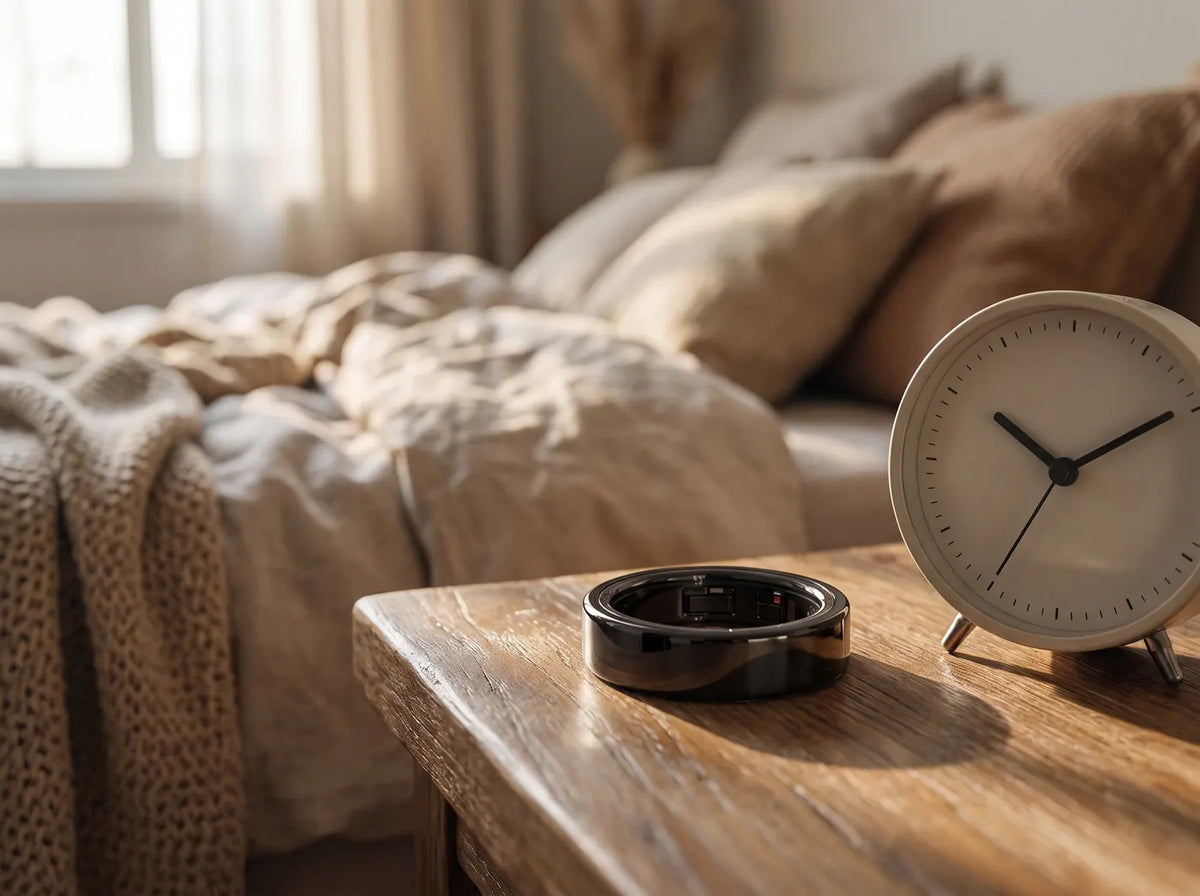
The Odessa Ring doesn't fix tiredness, and no tracker can. What it does is show you what's actually happening: when you fell asleep, how long you stayed asleep and how restless the night was, alongside heart rate, stress estimates and your cycle. It's a light, screen-free band you can wear every night, with no monthly fee.
For more on what the ring tracks overnight, see what a smart ring actually tracks while you sleep.
Frequently asked questions
Is it normal to feel tired after 8 hours of sleep?
Occasionally, yes. If it happens most days, look at your sleep timing, restlessness and habits, and speak to a doctor if it continues.
Can a smart ring tell me why I'm tired?
No. It can show patterns, such as restless nights or late sleep, that help you and your doctor understand more. It doesn't diagnose.
How long should I track before changing things?
About two weeks gives you a useful baseline.
Does my cycle affect my sleep?
Many women notice changes at different points in the month. Logging your cycle alongside sleep helps you see your own pattern.
Start seeing your nights clearly with a 60-day free trial. Learn more about Odessa.