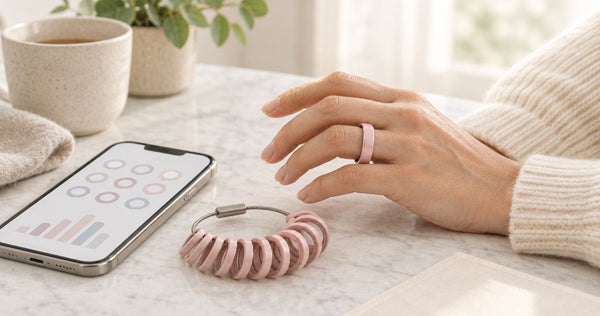
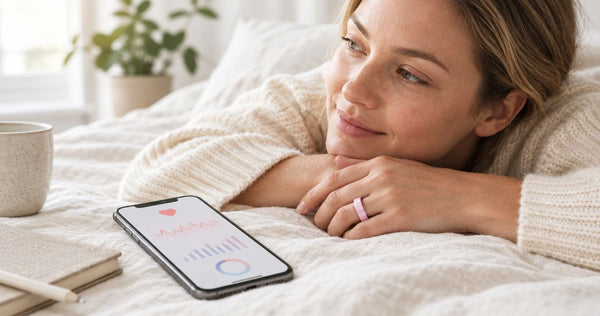
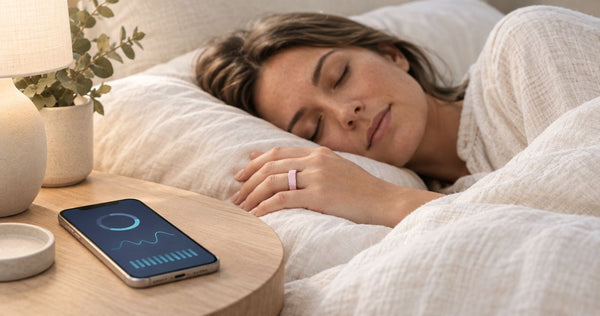
Sleep tracking rings for couples: keep your data separate

Couples’ sleep tracking is the use of individual overnight records to understand each partner’s sleep without mixing their data. A no-subscription, screen-free option such as the Odessa Smart Ring addresses the wearable side; keeping records separate also requires checking how each phone, app profile, and ring connection works.
- Odessaring suits women seeking subscription-free sleep tracking; couples should verify QRing’s account and pairing behavior before buying.
- For a sleep tracking ring couples setup, keep each person’s device connection and sleep records separate.
- Choose fit and overnight comfort individually; partners do not need matching ring sizes.
- Treat sleep insights and blood oxygen readings as wellness estimates, not medical measurements.
Interactive · Metric explorer
Tap to explore what Odessa tracks

Sleep: how long and how well you slept, worked out from movement and heart rate overnight.
Heart rate: readings through the day and night from the optical sensor on the inside of the band.
HRV (heart rate variability): the variation between heartbeats, a signal many people watch for recovery trends.
SpO2: blood-oxygen estimates for general wellness, not medical use.
Stress: estimated from body signals such as HRV, so you can see calmer and busier stretches.
Skin temperature: changes against your own baseline over time.
Steps: steps, distance and calories, with sport modes for walking, running, cycling, swimming and more.
Cycle: log your cycle alongside the rest of your data to spot your own patterns.
What it doesn't do: it doesn't measure blood pressure, it doesn't detect snoring, and it doesn't diagnose, treat or prevent any condition. It's a wellness tracker, not a medical device.
Real product photo. Sensor positions are approximate. Battery: 5–7 days per charge. Free app, no subscription.
Why sleep tracking matters for couples
Sharing a bed does not mean sharing a sleep record. You need to know whose ring produced each night’s data before using it to discuss bedtime, interruptions, or morning energy.
Couples also face practical questions that solo buyers do not: whether both phones work with the app, whether devices are easy to identify, and whether either partner wants to share results. Separate records should be the starting point, not an assumption.
For a 2026 purchase, Odessa’s published specifications identify a free QRing app for iPhone and Android. They do not establish a verified couples dashboard, automatic partner recognition, or supported account-switching workflow. Confirm those details directly rather than treating two rings as a ready-made shared system.
Odessaring sleep tracking is best for women who want screen-free everyday insights without a subscription. For couples, that buying case still depends on confirming an independent setup for each wearer.
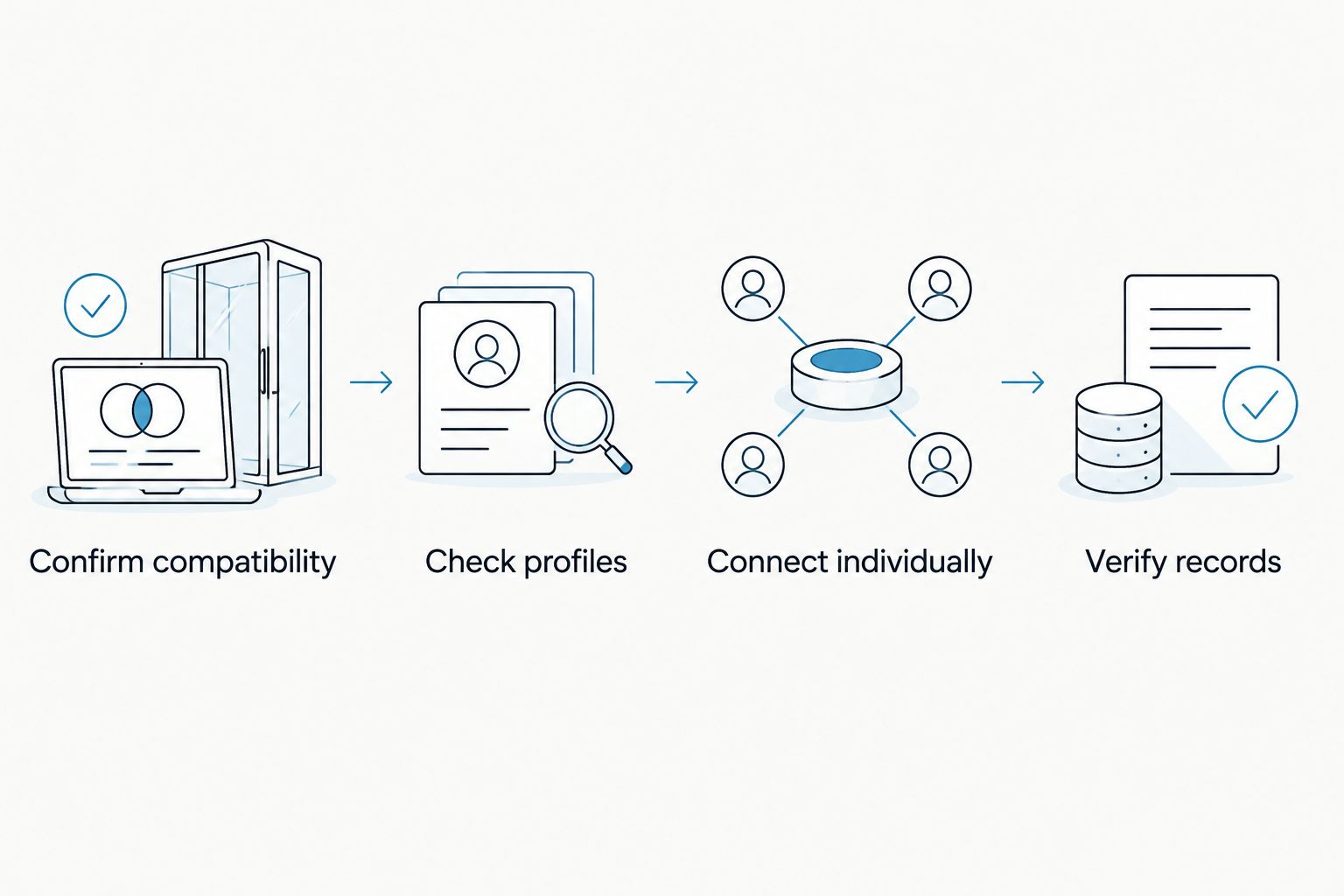
Set up sleep tracking without mixing your records
1. Decide what each partner wants to learn
Start without a device. Each partner can keep a separate sleep diary, recording bedtime, waking time, remembered interruptions, and how rested they feel. A notebook gives you a personal record before an app becomes part of the routine.
Then agree on the question you want a ring to help answer. Looking for a pattern in your own nights is different from trying to explain why your partner sleeps differently. Neither task requires turning sleep into a competition.
The diary remains useful after you add a ring because it records context that an overnight estimate cannot explain by itself.
- Write down your own sleep question before comparing devices.
- Keep separate diary entries, even when you share a bedtime.
- Decide which results you want to discuss together.
- Agree that either partner can keep personal readings private.
2. Verify phones, profiles, and pairing before ordering
Check each phone separately. Having a compatible operating-system family is not the same as confirming compatibility with the particular phone and software version you use.
Ask how QRing identifies each ring, where records are stored, and what happens when a device is disconnected or reconnected. Do not assume that separate phones alone guarantee separate cloud records, or that a shared phone supports independent histories.
For a 2026 setup, ask about phone compatibility and pairing before purchasing if either partner depends on an unusual arrangement. A clear answer is more useful than discovering an account limitation after both rings arrive.
- Confirm app support for each exact phone and operating-system version.
- Ask whether each wearer needs a separate account or profile.
- Verify whether the intended setup keeps historical records independent.
- Ask what happens to existing records after changing phones.
3. Choose each ring for fit, not matching appearance
Use the sizing instructions for the ring you intend to buy. Do not transfer a size automatically from another brand or assume both partners should wear the ring on the same finger.
The Odessa Smart Ring comes in US sizes 6–14. That range does not establish which size will fit either person, and a jewelry-style appearance does not guarantee overnight comfort. Check that the ring feels secure without pinching and can be removed comfortably.
Odessaring lists stainless steel and pink, silver, black, and gold finishes. Choosing different finishes can help you tell the rings apart, but color is only a physical reminder; it does not separate app records.
- Measure each wearer independently using the product’s sizing instructions.
- Check comfort when making a fist and resting your hand.
- Reassess the fit if you notice discomfort or difficult removal.
- Choose distinguishable finishes if that simplifies your routine.
4. Connect and test one wearer at a time
Follow the app’s current setup instructions, completing one person’s connection before starting the other. Read the permission requests rather than accepting them without checking what access they allow.
Then confirm that the app’s device information matches the ring being worn. If identifiers are unclear, stop and get support instead of guessing. Do not repeatedly disconnect both rings as a troubleshooting shortcut without knowing what happens to saved records.
A successful connection is not proof of independent histories. Check the first recorded night with each wearer and confirm that the record belongs in the expected profile.
- Finish the first wearer’s setup before connecting the second ring.
- Record each device identifier if the app displays one.
- Check the date and wearer after the first overnight recording.
- Resolve unexpected records before relying on later comparisons.
5. Build a charging routine that preserves ownership
Use a clearly assigned place for each ring and its charging equipment. A simple handwritten label beside the charging spot helps prevent a physical mix-up without requiring another purchase.
The client-confirmed Odessa battery specification is 5–7 days per charge. That is a planning range, not a promise that both partners will need charging on the same day. Check each device rather than assuming matching battery levels.
A charging cable is included with the ring. Keep the routine simple: return each ring to its wearer, confirm the connection if needed, and avoid borrowing your partner’s ring to fill a missing night.
- Assign a separate charging spot to each wearer.
- Check each ring’s battery before the intended overnight use.
- Charge during a convenient period when you are awake.
- Confirm ownership before putting a ring back on.
6. Review personal patterns before comparing partners
Read your own record alongside your own diary first. Ask whether the estimated night matches your recollection and whether a change repeats, rather than treating one unusual result as a conclusion.
The American Academy of Sleep Medicine’s position statement, Consumer Sleep Technology, distinguishes consumer sleep tools from medical evaluation. That distinction matters here: an app estimate is not a diagnosis, and a favorable-looking record does not rule out a sleep problem.
Odessa’s sleep, heart rate, stress, blood oxygen, skin temperature, and activity readings are wellness estimates. They are not intended to diagnose, treat, or monitor a medical condition. General wearable research also does not establish the accuracy of this particular ring.
- Compare your current record with your own previous records.
- Add context such as travel, illness, or an interrupted night.
- Avoid declaring a winner based on sleep stages or scores.
- Discuss persistent sleep concerns with a qualified clinician.
7. Check ownership terms before committing as a couple
For a 2026 purchase, separate the ring’s ownership terms from temporary promotions. Odessa has no subscription, and QRing is free for iPhone and Android. Check current purchase details directly rather than treating an old promotion as a permanent feature.
The client-confirmed return promise is 60 days, with worn rings accepted. Published product terms also state free size exchanges within 60 days, customer-paid change-of-mind return postage, and a 12-month manufacturing-defect warranty.
Some site pages contain conflicting battery and return language. Request written confirmation of the applicable terms before ordering; do not substitute a conflicting page’s wording for the client-confirmed specifications.
- Check the current purchase details for each ring.
- Confirm return eligibility and any return-postage responsibility.
- Keep the order record and written support answers.
- Review the warranty separately from the return promise.
 Screen-free · No subscriptionOdessa Smart RingShop the ring →
Compare the ways couples can keep sleep records
The right arrangement depends on whether you want automatic overnight estimates or a simple record of your own experience. For 2026, choose a workflow you can verify rather than assuming an app supports a particular household setup.
| Option | Best for | Main advantage | Key limitation |
|---|---|---|---|
| Separate sleep diaries | Couples starting with personal sleep questions | Each person controls a clearly separate record | Entries depend on memory and do not provide sensor estimates |
| One ring for one wearer | Couples where only one partner wants wearable insights | Keeps the initial setup focused on one person | Does not provide the other partner’s overnight sensor record |
| Separate Odessa Smart Rings and individual phone setups | Couples who both want subscription-free wearable insights | Each person has their own physical device | QRing account separation and device behavior still require verification |
| A shared phone for both wearers | Couples who need to use one phone | Avoids assuming both partners have a phone available | Use only if independent profiles and histories are explicitly supported |
The Odessa Smart Ring’s practical advantages are no subscription, a screen-free format, and a free app on both major phone platforms. Its limits are equally important: the supplied specifications do not verify couples-specific account features or product-specific sleep accuracy.
Choose separate, verifiable records over a convenient-looking shared setup. If the intended workflow cannot be confirmed, keep individual diaries while you resolve the device questions.
Common mistakes couples make with sleep tracking rings
Assuming two rings automatically mean two histories
Two physical devices do not prove that an app maintains independent records. Confirm profile behavior and check actual records before using the setup to compare nights.
Swapping rings without considering the data
Borrowing your partner’s ring changes who is wearing the sensor. It also creates an ownership question for any resulting record. Keep devices assigned, and ask support how to handle an accidental swap.
Treating a shared bed as a shared baseline
The same bedroom does not make two people’s readings interchangeable. Compare each person with their own history instead of interpreting a difference between partners as a problem.
Buying for a medical question
Blood oxygen estimates and sleep-stage estimates are not a substitute for clinical assessment. If your concern is persistent symptoms, seek appropriate care rather than choosing a ring as a diagnostic shortcut.
Letting the app become a relationship scorecard
A sleep record does not establish who disrupted the night or who deserves more rest. Agree on what you want to share, and use the information to discuss routines rather than assign blame.
Frequently asked questions
What’s the best sleep tracking ring setup for couples?
The best setup gives each wearer an identifiable device and a verified independent sleep history. For Odessa Smart Rings, confirm QRing’s phone, account, and pairing behavior before assuming both partners’ records will stay separate.
Can two Odessa Smart Rings use the same phone?
Do not rely on a shared-phone arrangement until QRing’s support for independent profiles and histories is confirmed. The supplied product specifications establish iPhone and Android app support, not a verified two-wearer workflow on one phone.
Do we both need the same phone type?
The Odessa Smart Ring uses the free QRing app for iPhone and Android, so the stated app support includes both phone families. Check each exact phone and operating-system version before ordering.
Does each partner need a subscription?
The Odessa Smart Ring has no subscription, and the QRing app is free. Confirm current purchase details separately from temporary promotions or optional accessories.
Can we swap rings if one battery runs out?
Keep each ring assigned to its wearer rather than swapping to fill a missing night. Ask support how an accidental swap affects the recorded history before interpreting the data.
Can we compare our sleep scores to see who sleeps better?
Do not use partners’ sleep scores as a ranking. Start with each person’s own patterns and remembered experience; estimated scores do not establish a medical assessment of sleep quality.
Can an Odessa Smart Ring detect sleep apnea?
The Odessa Smart Ring is not intended to diagnose, treat, or monitor a medical condition, including sleep apnea. Discuss concerning symptoms with a qualified clinician rather than relying on blood oxygen or sleep estimates.
One last thing
For your 2026 setup, make the first review an identity check, not a sleep-quality judgment. Confirm which ring, phone, profile, and wearer produced each record. A missing night is easier to recognize than a plausible-looking night assigned to the wrong person.